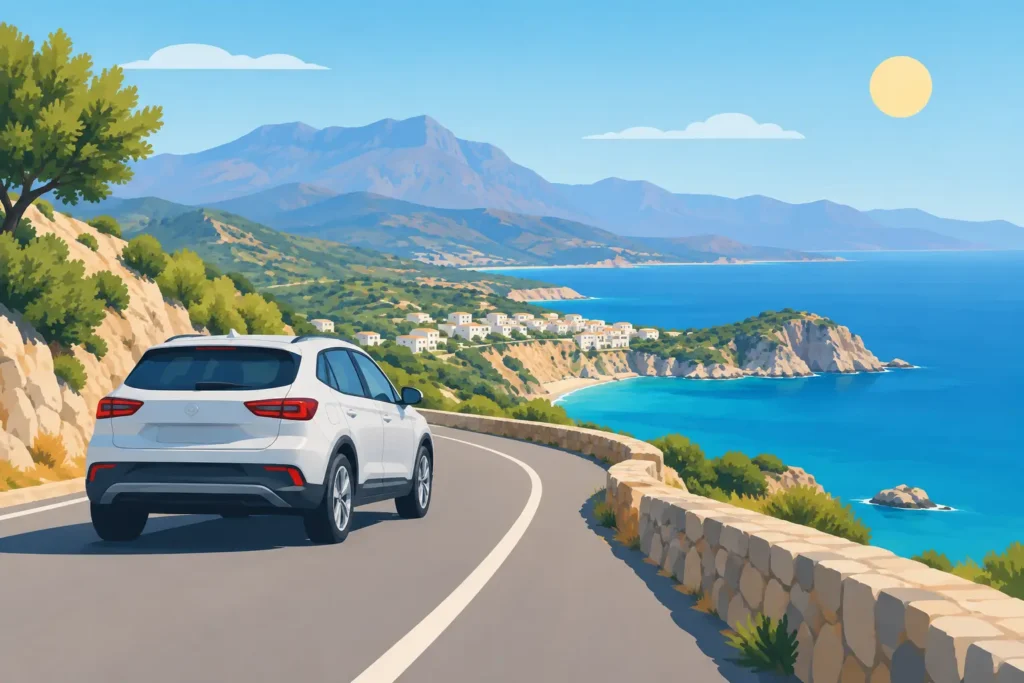

A map of Crete can be misleading. A beach that looks close may sit beyond a mountain pass, and a village 40 miles away can take more than an hour to reach. So, is the car best way to reach far places of Crete? For most visitors who want to see more than one resort town, the answer is yes - provided you choose the right vehicle and plan around the island’s real driving conditions.

Crete is long, varied, and built for independent travel. Public buses cover key routes, and organized tours work well for a single day out. But a rental car gives you something neither option can reliably offer: control over your time. You can leave before the crowds, stop for lunch in a mountain village, carry beach gear without a problem, and return to your hotel when it suits your family.
Is a Car the Best Way to Reach Far Places of Crete?

If your plans include Balos, Elafonissi, Vai, Matala, Preveli, the Lasithi Plateau, south-coast villages, or a multi-stop road trip, a car is usually the practical choice. These places are not impossible to reach without one, but the alternatives often mean fixed departure times, long connections, limited service, or expensive private transfers.
The biggest advantage is not speed alone. It is flexibility. Crete rewards travelers who can change plans when the wind picks up on one coast, when a beach parking lot is full, or when a local recommends a quieter cove 15 minutes away. With a car, you are not tied to a return bus or a tour group’s timetable.
That said, a car is not automatically the best answer for every stay. If you are spending a week in Heraklion or Chania with only one planned excursion, you may be happier walking, using taxis for evenings, and taking a guided day trip. Renting a car for days when it will sit unused is not good value.
Where a Rental Car Makes the Biggest Difference

Crete’s north coast has the island’s busiest towns and the strongest bus connections. Travel between Heraklion, Rethymno, Chania, Agios Nikolaos, and many major resorts is possible by bus. For travelers staying near these routes, public transport can be sensible for a simple city-to-city trip.
The calculation changes once you head inland or south. South-coast locations such as Loutro, Sougia, Paleochora, Plakias, and Ierapetra involve longer drives, fewer connections, or combinations of road and boat travel. A car will not take you directly to every destination - Loutro, for example, has no road access - but it gets you to the right harbor, trailhead, or departure point on your own schedule.
A rental car is especially useful for these types of days:
- Beach days where you want to visit two or three coves instead of one organized stop
- Mountain and village drives through areas such as Amari, Lassithi, or the foothills of Psiloritis
- Family outings with child seats, snacks, strollers, towels, and changing plans
- Split-stay vacations, such as arriving in Heraklion and leaving from Chania
- Early starts to popular beaches before midday traffic and parking pressure build

For couples and friend groups, the math can also be straightforward. Once several people are paying bus fares, taxis, or separate tour tickets, a car may offer better value as well as more freedom. Always compare the full price, not a headline daily rate that later grows with insurance, deposits, or unexpected extras.
The Real Trade-Off: Convenience Versus Driving

Crete is not difficult to drive if you are calm, attentive, and realistic. The main north-coast highway is the easiest long-distance route, but many of the island’s memorable places are reached by narrower roads. Expect bends, elevation changes, occasional goats, and slower local traffic in the mountains.
Distances also take longer than many US visitors expect. A 90-mile drive on Crete is not the same as 90 miles on an interstate. Build in time for curves, fuel stops, viewpoints, and a slower pace through villages. Do not schedule a long south-coast beach day, a late lunch, and an evening dinner reservation back across the island as if every road were a freeway.

Parking deserves planning too. In larger towns, use designated lots where possible and do not assume every curb is available. In small villages and beach areas, arrive earlier in high season. Never block a narrow lane, driveway, or farm access just because other cars are parked nearby.
The right approach is simple: choose a route that matches your confidence, avoid rushing after dark on unfamiliar mountain roads, and keep your daily driving manageable. A relaxed 60-mile day with a few stops is often more rewarding than trying to cover half the island.
Choose the Vehicle for Your Route, Not Just the Price
A compact car is often the smartest option for two people traveling on paved roads. It is easier to park in Chania’s side streets, easier to handle on narrow roads, and usually uses less fuel. For a family with luggage, a larger vehicle can be worth it, especially if you are changing hotels or carrying beach equipment.

Do not book a tiny car simply because it has the lowest advertised rate if you have four adults and multiple suitcases. Likewise, do not assume you need an SUV for every trip. Many famous destinations are accessible by normal paved roads. If your plan includes a rough access road, ask the rental company before booking. Vehicle restrictions and insurance conditions can apply on unpaved roads.
Coverage matters as much as car size. Island driving can include tight parking spaces, loose stones, and unfamiliar road layouts. Clear, comprehensive insurance with no excess reduces the risk of a small problem turning into an expensive vacation surprise. Check exactly what is included for glass, tires, wheels, the underside, theft, and any road restrictions before you accept the keys.
When Buses or Tours Are Better

There are situations where leaving the car behind makes perfect sense. A guided trip is a good choice if you want a local explanation of Knossos, Spinalonga, Samaria Gorge, or a wine region without dealing with navigation and parking. It also works well if only one person would be driving and everyone wants to relax.
Buses can be a practical option between major cities, particularly when you are not carrying much luggage and have no stops planned. They spare you from city parking and can be less expensive for a solo traveler. For a day in central Heraklion or old-town Chania, walking is often easier than driving anyway.
The limitation is timing. Bus schedules may be less frequent outside the main corridors, and a missed connection can change the whole day. Tours follow a set route. Neither option is ideal if you want to linger at a beach, stop at a roadside taverna, or leave early because the weather changes.
Booking a Car Without Vacation Surprises

A rental should make the trip simpler, not create another set of worries. Before reserving, confirm the pickup point, the payment process, the insurance terms, and whether you can return the car at a different location. This matters when arriving at Heraklion Airport and departing from Chania, or when you want delivery to a hotel rather than a rental desk queue.
Be cautious with deals that look unusually cheap on third-party sites. The lowest number on a screen may not include the protection, fees, or payment conditions you expect. A direct local rental company can explain the actual terms before you arrive and provide support if plans change.
AthensCars focuses on the details travelers ask about most: payment on arrival, no hidden costs, free cancellation, and comprehensive coverage options designed to reduce excess risk. For a Crete itinerary with airport, port, hotel, or city pickup needs, that clarity can matter more than a flashy online rate.
Make the Car Work for Your Itinerary

Pick up your car when you are ready to leave the city or start exploring, not automatically the moment you land. If you arrive late and are staying in central Heraklion or Chania for two nights, consider starting the rental on the morning you depart. You avoid paying for unused days and avoid parking stress while you are focused on the old town.

For a broader itinerary, a car from arrival can be the easiest choice. Collect it at the airport or port, load your luggage once, and drive directly to your first hotel. Keep water in the car, download offline maps before entering remote areas, and refill the tank before it becomes urgent. In rural Crete, convenience is best when you prepare a little ahead.
The far corners of Crete are worth the drive, but they are best enjoyed without a clock running in the background. Choose the car when your trip calls for freedom, clear coverage, and the ability to follow the road that looks more interesting than the original plan.