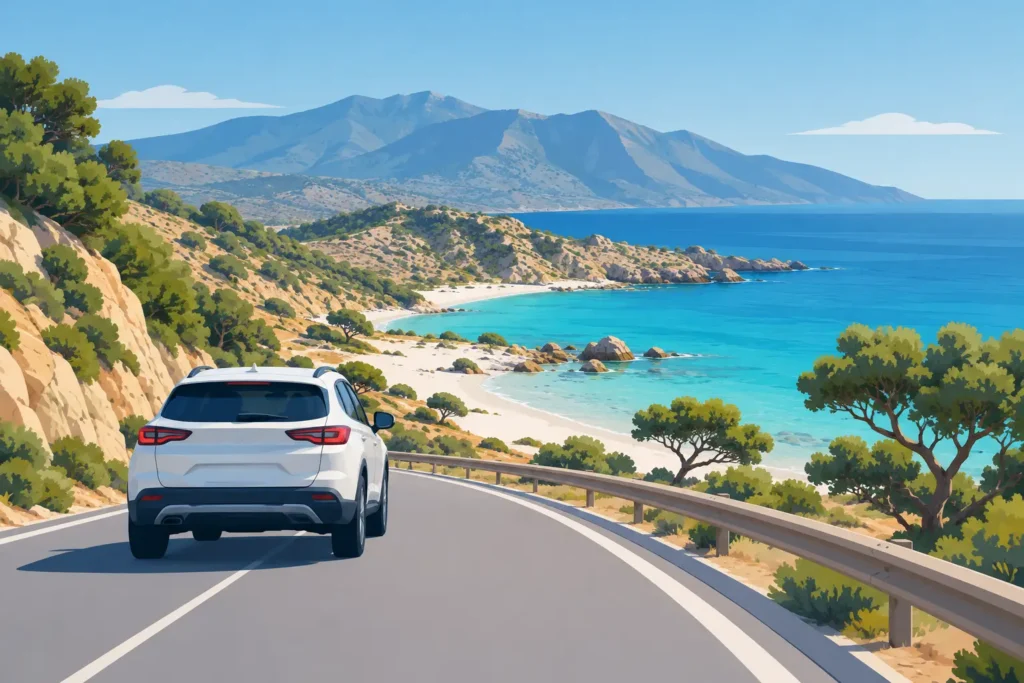
Kedrodasos is not the kind of beach you reach by following beach-bar signs, pulling into a paved lot, and ordering lunch. A drive by car to Kedrodasos takes you into southwest Crete, close to Elafonissi, then asks you to slow down, park carefully, and walk into one of the island's most natural coastal landscapes. That is exactly the appeal - but it also means a little planning matters.
This is a good trip for travelers who want independence, not a scheduled bus stop. With your own rental car, you can arrive early, bring water and shade, and leave on your own schedule. The key is choosing a sensible route, respecting the final access road, and treating this protected-looking landscape as the quiet place it is.
Driving by car is possible until a point you should park and walk towards the site. Do not underestimate the car's "role" in this place, damaging it could cost you of long waiting until road help arrives!! Best car for south Crete Chania.
Where Kedrodasos Is and What to Expect
Kedrodasos sits on the southwest coast of Crete, roughly one mile east of Elafonissi Beach. It is known for pale sand, clear water, low dunes, rocky shelves, and the juniper trees that give the area its name. Do not expect organized umbrellas, a dependable canteen, changing rooms, or a row of stores. This is a largely undeveloped beach area. Drive by Car to Kedrodasos.
That changes the way you should plan the day. Bring drinking water, food, sunscreen, hats, towels, and anything children will need. Bring a bag for every piece of trash you create. Phone signal can be variable in remote parts of western Crete, so save your route before leaving your hotel rather than relying entirely on a live connection.
Kedrodasos is often quieter than Elafonissi, especially outside peak summer hours. It can also be windy. If you are traveling with young children, want easy access to facilities, or are carrying lots of gear, Elafonissi may be the easier base. If you want space and a more natural beach day, Kedrodasos is worth the extra effort.
Drive by Car to Kedrodasos: The Best Route
For most visitors, the practical starting point is Chania or the north coast. From Chania, allow around 1 hour 45 minutes to 2 hours, depending on traffic, stops, and where you begin. The route generally heads west toward Kissamos, then south through the dramatic Topolia Gorge and onward toward Elafonissi.
 The paved road through the mountains is scenic but not fast. There are curves, narrow sections, local traffic, and occasional goats near the road. Drive at a pace that suits the conditions, not the speed you hoped to average. If someone behind you is in a hurry, use a safe wider section to let them pass. There is no benefit in turning a beach day into a stressful drive.
From the Elafonissi area, follow current map directions toward Kedrodasos and look for the appropriate access point or parking area. The final approach may involve a narrow, rough, or unpaved track, depending on the route selected and recent weather. Conditions change, and navigation apps do not always distinguish a normal road from a track that is unsuitable for a standard passenger car.
The smart rule is simple: when the surface becomes deeply rutted, very rocky, sandy, or clearly unsuitable, stop and park only where it is permitted and safe, then continue on foot. Do not force a rental car down a track just because a map shows a line. A short walk is better than a damaged tire, scraped underside, or a vehicle stuck far from help.
What is the prefecture Kedrodasos is located to - The Municipal Unit of Pelekanos
The Municipal Unit of Pelekanos is situated in the southwestern part of Chania Prefecture, ex Municipality of Kantanou Selinou, Crete. It was established through the merger of the former communities of Paleochora, Sarakina, Voutas, Sklavopoula and Vothiana. The area covers approximately 166,618 acres and has a population of 4,259 inhabitants.
Paleochora, the main settlement of the area, is beautifully situated on a small peninsula between two magnificent beaches. The local economy is primarily based on tourism, the cultivation of early-season vegetables in the fertile Kountoura region, olive production and livestock farming throughout the wider Municipal Unit.
One of the most memorable experiences in Paleochora is watching the sunset from the Venetian fortress of Castel Selino, commonly known today as The Fortress. Built in the 13th century by Duke Marino Gradenigo, this historic monument offers a glimpse into the region's rich past and provides a wonderful setting from which to admire the surrounding landscape.
The area is also distinguished by its remarkable historical, archaeological and religious heritage. Numerous monuments, ancient settlements and churches bear witness to its long history and Byzantine traditions. Among the most notable sites are the churches of Agios Georgios in Anydroi, Agia Marina in Platanias and Agios Ioannis in Kalamos, as well as the archaeological remains of ancient Yrtakina, Vienna, Kalamidi, Lissos and ancient Pelki, from which the Municipal Unit of Pelekanos derives its name.
Visitors can also explore the Museum of the European Resistance Fighters (Museum of the Acrites of Europe), which highlights an important chapter of the region's history. Nature lovers will find beautiful walking routes, including the impressive Anidri Gorge and sections of the E4 European long-distance trail, leading towards Kedrodasos and Sougia.
Paleochora also serves as an important maritime gateway to the southern coast of Crete. Regular boat connections link the area with Sfakia, Gavdos, Agia Roumeli, Sougia, Elafonisi and other destinations along the Libyan Sea, offering visitors the opportunity to discover some of the island's most beautiful coastal landscapes.
For those who enjoy the sea, the region offers an abundance of exceptionally beautiful, clean beaches and opportunities for boat excursions and coastal exploration. Its crystal-clear waters, unspoilt natural surroundings, picturesque villages and rich cultural heritage make the Municipal Unit of Pelekanos an attractive destination for visitors seeking both relaxation and authentic experiences in southwestern Crete.
From Heraklion or Rethymno
Kedrodasos is possible as a long day trip from Heraklion, but it is a serious driving day. From Heraklion, expect roughly 3 to 3.5 hours each way under normal conditions. From Rethymno, the trip is shorter but still usually more than 2 hours each way.
If your vacation includes overnight stays in Chania, Kissamos, or western Crete, visit from there instead. You will spend less time in the car and have more flexibility if the wind is strong or you decide to stop at a village, viewpoint, or Elafonissi along the way.
What Car Should You Rent?
A compact car is usually enough for the main paved route to the Elafonissi area. Crete's mountain roads reward a manageable vehicle more than an oversized one, especially when you meet oncoming traffic on narrow sections. For a couple carrying light beach gear, an economy or compact model is normally the sensible choice.
A larger vehicle can make sense for families, groups, child seats, or luggage-heavy itineraries. An SUV may provide more comfort and clearance on uneven legal access roads, but it is not a license to drive off-road. In fact, a larger vehicle can feel less convenient on tight village streets and narrow mountain bends.
Before booking, ask a direct question about unpaved-road use and coverage. Rental terms vary by company and vehicle category. Fully comprehensive insurance is valuable for a Crete road trip, but no policy should be treated as permission to drive on prohibited roads or through terrain that risks damage. AthensCars can clarify vehicle suitability and coverage before pickup, which is exactly when you want those answers - not after you reach a rough track.
Parking Without Damaging the Place
Parking is one of the biggest practical issues at Kedrodasos. In high season, arrive earlier rather than assuming there will be room later. Park only in established spaces or clearly suitable roadside areas. Keep access clear for other vehicles and emergency services.
Do not drive onto sand, dunes, vegetation, or open coastal ground to get closer to the water. The beach may look wide and empty, but plant roots and fragile sand formations are easily damaged. Besides the environmental impact, soft sand can trap a car quickly. Recovery is expensive, disruptive, and rarely covered as a normal holiday inconvenience.
After parking, expect a walk over uneven ground. Closed-toe sandals or secure water shoes are more useful than flip-flops if you plan to explore beyond the nearest sandy section. The coastline has beautiful rocky spots, but they can be slippery when wet.
Timing, Fuel, and Basic Road Safety
Leave with a full tank or enough fuel for a return trip. Southwest Crete is not where you should rely on finding the cheapest or closest gas station at the exact moment you need one. Fill up near Chania, Kissamos, or another larger town, especially if you are making several stops.
Aim to reach the area in the morning during July and August. You get cooler driving temperatures, easier parking, and more time to choose a comfortable beach spot. Late afternoon can be beautiful, but make sure you know where you parked and allow daylight for the walk back and the mountain drive home.
Avoid driving after alcohol, and do not underestimate fatigue after swimming in the sun. The return route has enough bends to demand attention. Rotate drivers if possible, take a proper break, and keep water in the car.
A Few Things Worth Bringing
For Kedrodasos, the useful basics are more practical than glamorous: plenty of water, food, sun protection, a phone power bank, cash for small stops on the way, and a lightweight shade option if you have one. If you plan to snorkel, bring your own equipment. Facilities are limited, and that is part of why the beach remains special.
Also carry your rental agreement and the local assistance number provided at pickup. A flat tire or warning light is much easier to handle when you can call the company directly and explain exactly where you are.
Kedrodasos rewards travelers who come prepared and leave no trace. Take the slower road, park with care, and give yourself enough time to enjoy the beach without watching the clock.