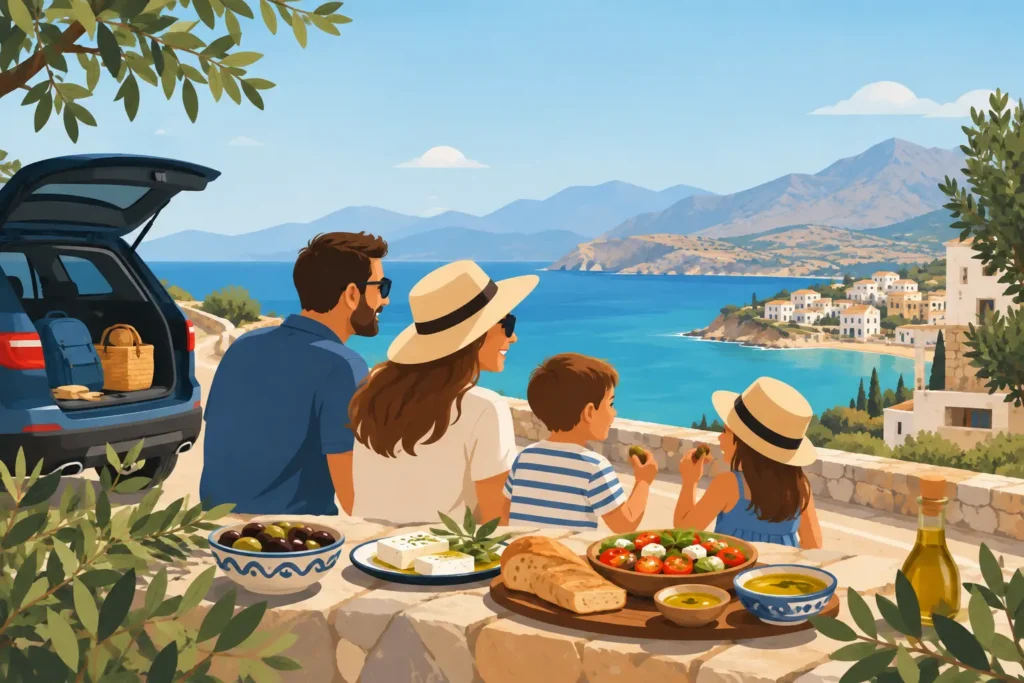
A family food tour Crete by car is not about racing between famous restaurants. It is about pulling over for warm bread, letting the kids taste a spoonful of local honey, and having enough room in the day for a long village lunch. With your own car, you can follow your family’s appetite rather than a fixed tour timetable.
Crete is made for this kind of day. The distances can look short on a map, but village roads, photo stops, naps, and a child who suddenly needs a restroom all change the schedule. Keep the route simple, book a car with the space you actually need, and choose two or three food experiences that feel worth the drive.
Build a family food tour in Crete by car
The best plan has one food-focused area, one proper meal, and a clear return route before everyone is tired. Trying to cross half the island for breakfast, lunch, and dinner turns a relaxed outing into a day of back-seat complaints.
For families staying in Heraklion, the Archanes and Peza area is an easy choice. It is close enough for a late start, yet it feels properly rural once you leave the city. Begin in Archanes with a bakery stop. Look for fresh bread, savory pies, sesame rings, and small sweet pastries. Buy a few items for later rather than expecting the kids to wait until lunch.
From there, continue through the vineyard villages around Peza. Even if wine tasting is not part of your plan, this is a good landscape for a slow drive, an olive oil stop, or a farm shop with local products. Follow it with lunch at a traditional village taverna, where shared plates make more sense than ordering one large meal per person. Grilled meat, potatoes, Greek salad, cheese pies, fried zucchini, beans, and simple pasta are usually safer starting points for younger eaters than a long list of unfamiliar dishes.
Families based in Chania can take the same approach in the foothills and villages south of the old town, or toward Apokoronas. Start with a bakery, choose a small cheese or honey producer if one is open, then make lunch the main event. Do not choose your route solely from social media photos. Ask your hotel host or the restaurant when it is open, whether there is easy parking, and whether the kitchen is serving food that day.
Choose stops children can enjoy
A good food stop gives children something to see, smell, or do while adults talk. A bakery works because the reward is immediate. An olive grove can work if there is room to walk. A taverna with outdoor seating is far easier than a formal dining room where everyone is expected to sit still for two hours.
Crete’s best flavors are often the simplest: yogurt with honey, fruit, bread with olive oil, mild cheeses, potatoes, tomatoes, grilled chicken, and fresh orange juice. Encourage tasting, but do not make the day a test of adventurous eating. Pack familiar snacks and water. That gives you freedom to order local food without worrying that lunch will become a negotiation.
If your child has allergies or dietary restrictions, explain them directly before ordering. In smaller villages, English may be limited, so keep the message short and specific. Ask what is in a dish, not just whether it is safe. Shared fryers, sauces, and pastries can matter as much as the main ingredients.
Plan the route around driving reality
A food route should look easy on the road, not just on a screen. Crete has excellent main roads, but many memorable food stops sit behind narrower village streets. The trade-off is simple: the more remote the taverna or producer, the more time you should leave for driving and parking.
Start earlier than your usual vacation pace if you want a bakery visit and lunch without rushing. Aim to be at your main lunch stop before the afternoon heat and before young children become too hungry. After lunch, choose only one more stop - perhaps ice cream in a town square, a beach swim, or a short scenic drive - then return.
Avoid building a route that requires mountain roads after dark, especially if you are unfamiliar with the island. Rural driving is generally straightforward when you stay patient, use a navigation app, and allow local traffic to pass safely. Roads can narrow quickly, and parking in old villages may be outside the center. That is normal. A five-minute walk to a bakery is better than forcing a large vehicle through a tight lane.
For a full-day trip, keep driving to roughly two to three hours total, broken into short sections. That may sound conservative, but it leaves time for actual food, bathroom breaks, wandering, and the unexpected stop that becomes the family’s favorite memory.
Pick the right rental car before you leave
A compact car is often the easiest option for two adults and one young child traveling light. For two children, a stroller, beach bags, and groceries from farm shops, choose more luggage space instead of hoping everything will fit. The cheapest category can become expensive in stress if bags are on laps or the stroller must stay behind.
Reserve child seats in advance and check that you have the right type for your child’s age and size. Bring water, wipes, a light layer for air-conditioned drives, and a reusable bag or small cooler for cheese, fruit, and bakery purchases. In summer, do not leave food, electronics, or children in a parked car, even for a quick stop.
The rental terms matter as much as the vehicle. A family road day is more relaxed when you know what happens if you get a flat tire, scrape a wheel on a narrow street, or need help far from your hotel. Look for clear pricing and coverage details before arrival, not a low headline price followed by surprises at the counter.
AthensCars keeps this straightforward for Crete travelers with pay-on-arrival booking and comprehensive insurance options designed to reduce the worry around ordinary vacation driving. Check the vehicle category and included protection when you reserve, especially if your plan includes village roads and multiple pickup points.
Order like a family, not like a food critic
At a Cretan taverna, order gradually. Begin with two or three plates for the table, see how hungry everyone is, then add another dish if needed. This reduces waste and lets children try food without the pressure of a full individual portion.
A practical family lunch might include bread, a salad, one cheese or vegetable dish, potatoes, and a grilled main dish. Ask what is fresh and what the kitchen recommends that day. In many places, the answer will be more useful than searching for the most recognizable item on the menu.
Leave room for the small gestures that make Cretan hospitality memorable. You may be offered fruit, a sweet, or a small dessert after the meal. Accepting it can be a lovely end to lunch, but keep expectations flexible. Every taverna operates differently, and the best ones are often busy when locals are eating.
Keep the day flexible
The most common mistake is treating a family food outing like a checklist. If the bakery is closed, use a supermarket for snacks and move on. If the kids love a village square, stay longer and skip the olive oil stop. If lunch is excellent, cancel the plan for a second restaurant.
Before leaving your accommodation, confirm opening hours by phone when possible, fuel up, and download your route for areas with weaker signal. Carry some cash for small purchases, although many businesses accept cards. Most of all, leave empty space in the schedule. A roadside watermelon stand, a grandmother selling herbs, or a shaded table where the kids can run around may be the stop everyone talks about later.
Give your family a car, a short route, and permission to linger. Crete will handle the rest.