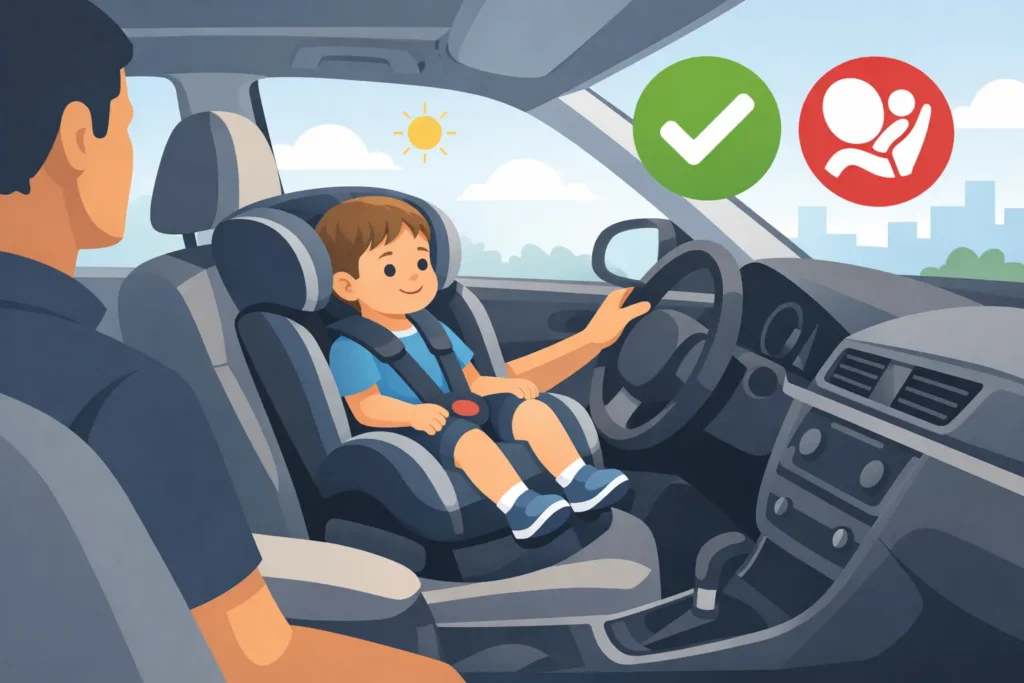
You collect the hire car, fit the child seat, and then the practical question arrives fast: is child seat allowed in front seats? The short answer is yes, sometimes - but only under specific conditions, and not always as the safest option. If you are driving in Crete with children, this is one of those rules worth getting right before you leave the airport car park.
Is child seat allowed in front seats in practice?
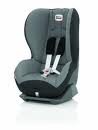
A child seat can be allowed in the front passenger seat, but legality and safety depend on the child’s age, the type of restraint, and whether the airbag is active. That last point matters most. If you place a rear-facing child seat in the front while the front passenger airbag is switched on, that can be extremely dangerous.
This is where many travellers get caught out. They assume that if a seat physically fits, it is fine to use. It is not that simple. Car manufacturers, safety guidance, and road rules all point to the same principle: the rear seats are normally the safer place for children, and the front seat is usually a second-choice solution.
If you are hiring a car for a family trip, the sensible approach is straightforward. Use the back seat whenever possible, check the car manual if there is any doubt, and never place a rear-facing child seat in front of an active airbag.
When a child seat in front seats may be allowed
There are situations where fitting a child seat in the front passenger seat is permitted. This may happen if the vehicle has no rear seats, if the rear seats are already occupied by other children in restraints, or if the correct fit in the rear is not possible. Some families also need the front seat temporarily for practical reasons, especially in smaller vehicles.
Even then, the setup has to be correct. A rear-facing seat should only be used in the front if the passenger airbag is deactivated. If the seat is forward-facing, the risk from the airbag is different, but the seat still needs to be fitted according to the manufacturer’s instructions, and the passenger seat may need to be moved back as far as possible.
That is the trade-off. Front-seat use may be legal in some cases, but legal does not always mean ideal. The back seat remains the safer choice in most normal holiday driving situations.
Rear-facing seats need extra caution
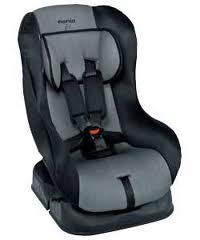
Rear-facing seats protect very young children well, but they must be handled carefully when placed in the front. If the airbag deploys, it can strike the child seat with severe force. That is why this setup is treated so seriously.
If you are not completely sure that the airbag is switched off, do not use a rear-facing seat in the front. Not guesswork, not probably, not maybe. This is one area where certainty matters.
Forward-facing seats still need correct positioning
A forward-facing child seat in the front may be possible in some vehicles, but it still needs proper adjustment. The seat should be fitted tightly, the harness should sit correctly, and the passenger seat should usually be moved well back from the dashboard.
Parents sometimes focus only on whether the seat can be installed. The better question is whether it can be installed correctly. A poor fit reduces the benefit of the restraint, wherever it is placed.
Why the back seat is usually better
There is a reason safety advice keeps returning to the rear seats. In a frontal collision, the front of the vehicle absorbs much of the impact. Children seated in the rear are generally further from that zone and further from dashboard-mounted airbags.
For most families, that settles the question. If the rear seat is available and the child seat fits properly there, use it. It is simpler, safer, and avoids confusion about airbag settings.
On holiday, simple usually wins. You may be arriving tired, carrying luggage, and trying to get on the road to your hotel or villa. The fewer variables you leave to chance, the better.
Common mistakes families make with front-seat child seats
The biggest mistake is assuming all front-seat setups are basically the same. They are not. Vehicles vary, child seats vary, and airbag systems vary. What was acceptable in one car back home may not be suitable in another.
Another common problem is using the wrong seat for the child’s size. Parents often speak about age, but the correct restraint usually depends on height and weight as well. A child may have outgrown one seat earlier than expected, or still need a more protective setup for longer.
There is also the issue of rushed fitting. At airports and ports, people are in a hurry. They want to load bags, settle children, and start driving. That is exactly when details get missed - twisted belts, loose installation, clips not secured, headrests in the way, or an airbag not checked.
Those small errors matter more than people think.
What to check before you drive away
If you are travelling with children, take two extra minutes before departure. It is worth far more than two minutes later.
Check that the child seat matches the child’s size. Check whether it is rear-facing or forward-facing. Check where the seat is being fitted. If it must go in the front, check the passenger airbag status before the child sits down. Then make sure the restraint is tightly installed and the harness sits flat, not twisted.
If you are using your own child seat, you already know how it works, which is often the easiest option. If you are using a supplied seat, do not be shy about asking for time to fit it properly. A reliable local car hire company should understand that this is not an extra favour. It is part of travelling safely with children.
Hiring a car in Crete with children
Crete is a brilliant island for independent travel, but family driving here is not just about directions and fuel stops. You will likely be moving between airport, accommodation, beaches, villages, and day-trip locations. That means children may spend a fair amount of time in the car, sometimes on winding roads, sometimes in summer heat, sometimes after long flights.
That makes the child-seat question more than a legal technicality. You want the safest and least stressful arrangement from the start. If the rear seat works, that is normally the right answer. If the front seat is the only realistic option, the setup must be checked properly.
This is also where booking direct helps. Clear answers matter more than glossy promises. If you need a child seat, or need to understand whether a particular seat can go in the front of a specific vehicle category, ask before arrival so there is no confusion at pickup. AthensCars keeps things simple for families for exactly this reason - clear terms, local support, and no hidden surprises when you are standing outside the terminal with children and luggage.
Does the law and safety advice always say the same thing?
Not always. That is where confusion starts.
A setup can be technically allowed under the rules but still not be the safest available option. For example, a forward-facing seat in the front may be lawful in certain conditions. Yet if the same seat fits properly in the rear, most safety guidance would still favour the rear.
So if you are asking, is child seat allowed in front seats, the better follow-up question is this: allowed compared with what? If the choice is between a correct front-seat installation and no proper restraint at all, the correct front-seat installation is obviously better. But if the choice is between front and rear, rear usually wins.
That is the kind of practical distinction worth remembering.
The safest rule for most family travellers
If you want one reliable rule to follow without overcomplicating it, use this: put the child seat in the back whenever you can, and never place a rear-facing child seat in front of an active airbag.
That covers the main risk and keeps decision-making clear. If you need to use the front seat because of your vehicle layout or family setup, double-check the seat instructions and the car’s passenger airbag system before setting off.
Holiday driving should feel easy, not uncertain. Get the child seat position right at the start, and the rest of the journey becomes much simpler. When safety is clear, the road ahead usually is too.