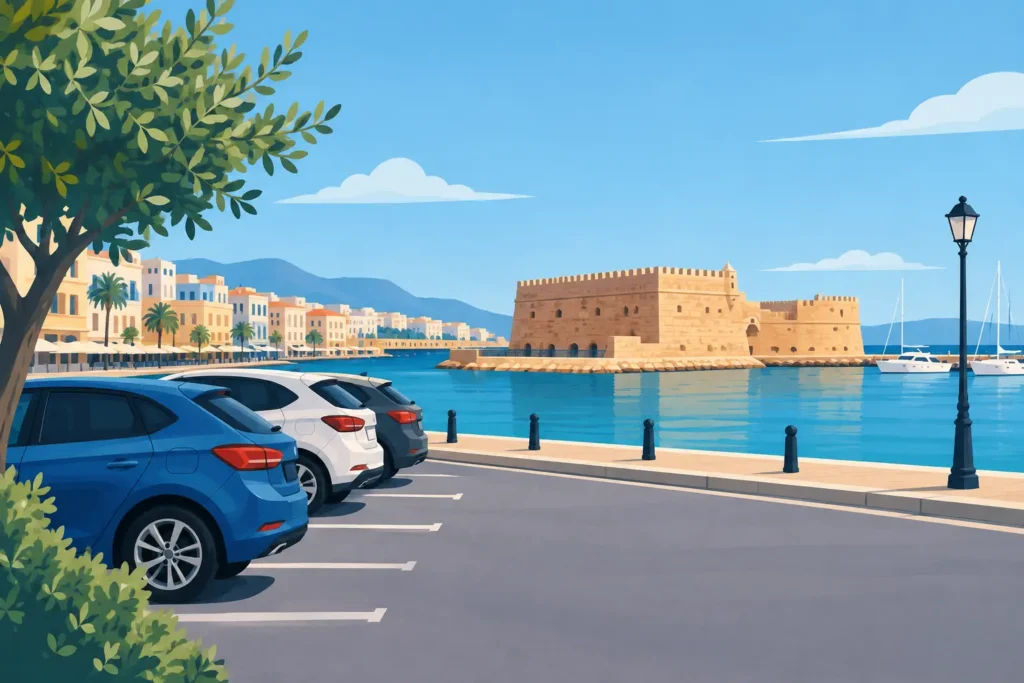
Heraklion is built for exploring on foot once you reach the center. That is the key to parking in Heraklion city without wasting the first hour of your vacation circling narrow streets. Drive close to the area you want to visit, choose a legal space or organized lot, and finish the day on foot. Trying to park directly outside every old-town sight is where visitors usually create stress.
For travelers collecting a rental car at Heraklion Airport, the port, or their hotel, a little planning makes a major difference. The city is busy, streets can be tight, and parking rules are not something to guess at. Treat your car as your connection to the rest of Crete, not as something that must follow you to every café table and museum entrance.
Parking in Heraklion City: Start With Your Destination
Before setting your GPS, decide what you are actually doing in town. The historic center, Venetian harbor, Archaeological Museum area, port, and market streets are close enough that one well-chosen parking spot can serve most of a half-day visit. If you are staying overnight, ask your hotel in advance whether it has private spaces, a partner garage, or a recommended nearby lot. Do not assume that a central hotel includes parking.
Visitors heading to Lion Square, the pedestrian shopping streets, or the harbor should expect to walk after parking. That is normal and usually faster than hunting for a closer spot. If you are traveling with young children, carrying luggage, or have limited mobility, arrange a drop-off near the entrance first when it is permitted, then park the vehicle properly.
The port is different. Ferry traffic, coaches, taxis, and rental-car movements can make the area feel more hectic than the map suggests. Build extra time into your schedule, especially on embarkation days. If you are returning a car before a ferry or collecting one after arrival, confirm the handover location with your rental company rather than relying on a last-minute search.
Your Main Parking Options
Heraklion gives drivers three practical choices: on-street paid parking where marked, private or municipal parking facilities, and hotel parking. The best option depends on your timing, vehicle size, and tolerance for narrow streets.
Marked street parking
On-street parking can be convenient for a short visit, but only use clearly marked legal spaces. Look carefully for signs, painted curb restrictions, resident-only information, loading zones, taxi ranks, bus stops, and spaces reserved for people with disabilities. Rules and payment methods can vary by street, so read the instructions on the nearby sign or meter rather than assuming the same rule applies across the city.
Street spaces disappear quickly during business hours and summer afternoons. A compact rental car is an advantage here, but it does not make an illegal space acceptable. If the space looks too tight, blocks access, or has unclear signs, move on. A parking ticket or a towed vehicle is a poor trade for saving a few minutes.
Organized parking lots and garages
For most visitors, an attended lot or garage near the center is the calmer choice. You know the car is in a designated place, you avoid squeezing between parked vehicles on older streets, and you can begin sightseeing immediately. This is especially sensible if you plan to visit the museum, shop, have lunch, and stay into the evening.
Check the posted opening hours before leaving the car. Some facilities may not operate around the clock, and rates can change by duration or season. Keep your ticket somewhere secure and do not leave it in the vehicle. If you are returning late, choose a facility that clearly states its closing arrangements or use parking your hotel has confirmed.
Hotel parking
Private hotel parking is worth reserving when available, particularly in high season. Ask two direct questions before you arrive: Is the space on the property, and is it guaranteed? A hotel may describe nearby public parking as available, which is not the same as holding a space for your car.
If your accommodation is inside or beside the old town, request clear driving instructions as well. GPS can lead drivers toward pedestrian streets, restricted lanes, or entrances that are difficult to identify in traffic.
Read the Street, Not Just the Map
A navigation app can take you to an address, but it cannot replace the sign at the curb. Heraklion has one-way streets, pedestrian zones, delivery activity, and local restrictions that can change how accessible an area feels. The last few blocks are often the most difficult part of the drive.
Avoid stopping in lanes marked for buses, taxis, emergency access, loading, or turning traffic. Do not park on sidewalks just because other cars appear to be doing so. That can obstruct pedestrians, wheelchairs, strollers, and local businesses, and it may lead to enforcement.
Be equally careful near corners. A car that seems safely out of the way can still reduce visibility at a junction or prevent a larger vehicle from turning. When in doubt, choose a paid facility and remove the question completely.
A Simple Plan for a Day in the Center
Arrive earlier than you think you need, especially from June through September and on cruise-ship days. Morning is often easier for finding a legal space and gives you time to enjoy the city before the midday heat. If your visit starts later, go straight to an organized lot instead of gambling on street parking.
Bring the basics before you leave your hotel: your phone, payment card or cash if needed, sunglasses, water, and the parking details you may need on return. Take a quick photo of the lot entrance, level, bay number, and any payment instructions. It sounds small, but it prevents the classic vacation problem of remembering the restaurant perfectly and forgetting where the car is parked.
Do not leave passports, electronics, bags, or beach gear visible inside the vehicle. Crete is welcoming, but the same common-sense rule applies here as in any busy city. Put valuables in the trunk before you reach your parking place, not after opening the doors in a public lot.
If you are visiting Knossos and central Heraklion on the same day, consider which stop needs the car more. Knossos is outside the core and is easier to reach by vehicle. Once you return to town, park once and walk. This approach saves fuel, avoids repeated searches, and gives you a better feel for the center.
Driving In and Out Without the Pressure
Many visitors are comfortable driving on Cretan roads but feel less confident in city traffic. That is understandable. Give yourself permission to miss a turn rather than making a sudden maneuver. Continue safely, let the navigation reroute, and approach again. No museum reservation or lunch booking is worth a risky turn across traffic.
Use extra caution with scooters, motorcycles, pedestrians stepping into the road, and delivery vehicles. In narrow streets, fold in mirrors where appropriate and drive slowly. If a street becomes too tight for comfort, do not force it. Reverse carefully only when it is safe, or continue to a wider route.
For airport departures, do not plan to park in the center and cut it close. Collect your car well ahead of time, allow for traffic on the route to the airport, and follow your rental return instructions. The same applies to ferry departures from the port. Your final morning should be straightforward, not a search for a missing parking space or a rushed drive through unfamiliar streets.
Make Your Rental Work for the Trip
The right rental setup removes much of the pressure. A smaller vehicle can be easier to handle in central Heraklion, while families with several suitcases may need more luggage room and should prioritize hotel or garage parking. There is no single correct choice. It depends on whether your trip is city-heavy, beach-heavy, or a full island road trip.
Choose a rental company that explains pickup, return, insurance, and support clearly before you arrive. AthensCars is built around that direct local approach: simple pickup arrangements, payment at handover, and comprehensive coverage designed to reduce unpleasant surprises. Still, coverage does not replace careful driving or legal parking. Protect the car, follow the signs, and contact your provider promptly if anything happens.
Heraklion rewards visitors who park once, slow down, and walk its streets. Set up your space before the crowds build, keep the parking instructions with you, and let the car wait safely while you enjoy the city.