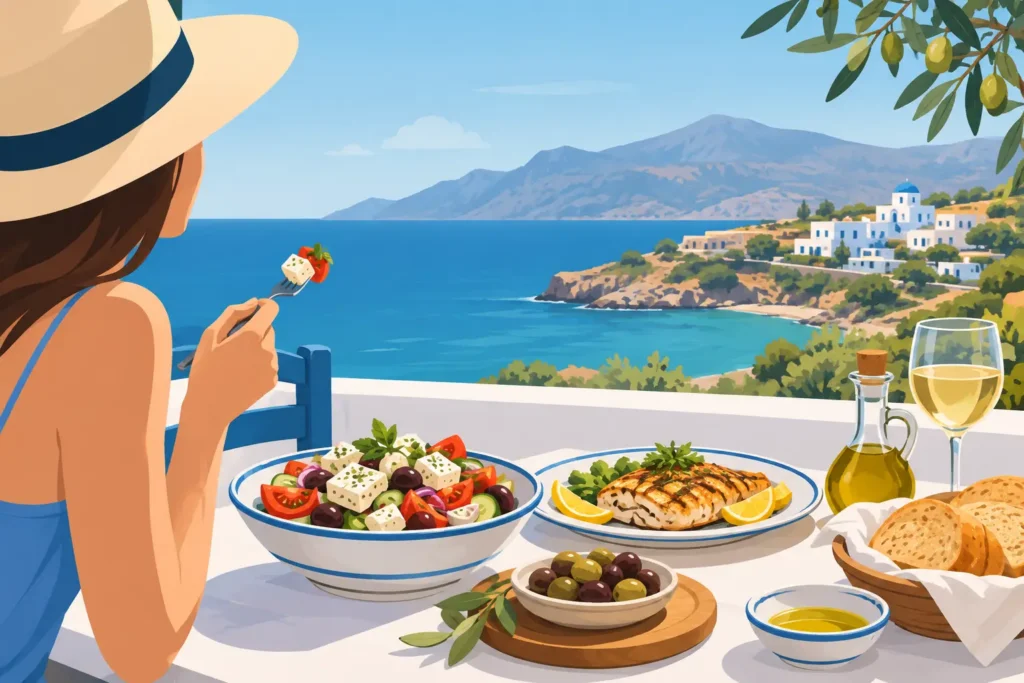
A plate of grilled lamb, a tomato salad still warm from the sun, and a basket of bread with local olive oil can explain more about Crete than a menu ever could. Ask why tourists like Greek food in Crete, and the short answer is that it feels honest: recognizable ingredients, generous portions, and meals that belong to the place where they are served.
For visitors, Cretan food is not usually a formal dining experience that requires reservations, dress codes, or guesswork. It is part of the day. You might stop after a swim, eat late after driving through the mountains, or sit down in a village square while children play nearby. The food is satisfying, but the setting and the welcome are what turn a simple meal into a vacation memory.
Why Tourists Like Greek Food in Crete
Crete has a strong food identity even within Greece. The island is large, agricultural, and proud of its local products. Tavernas commonly use olive oil from nearby groves, cheese made in the region, herbs collected from the hills, vegetables grown close by, and fish brought in from the coast. That connection is easy to taste.
Travelers also appreciate that many dishes do not try too hard. A good dakos is barley rusk, tomato, olive oil, cheese, and oregano. A plate of horta is simply wild greens with lemon and olive oil. The ingredients have nowhere to hide, so freshness matters. When they are good, the dish is good.
There is also comfort in the food. Greek cooking in Crete gives families, couples, and friend groups plenty of familiar choices without feeling repetitive. Grilled meat, potatoes, salads, roasted vegetables, rice dishes, bread, and cheese are easy to share. More adventurous diners can order snails, goat, rabbit, or local seafood, while cautious eaters still have plenty to enjoy.
The Cretan diet feels generous, not restrictive
Many visitors arrive expecting Greek food to be healthy but light. Crete offers a better balance than that. The traditional Cretan diet is built around vegetables, legumes, fruit, herbs, fish, grains, and olive oil, but a real taverna meal can still be filling. You can eat well after a beach day or a long drive without feeling like you have ordered a bland “healthy option.”
Olive oil is central to this experience. It is used freely in salads, cooked vegetables, stews, and even simple bread service. The flavor is often peppery, grassy, and noticeably fresher than the oil travelers use at home. It gives dishes richness without relying on heavy sauces.
That said, healthy does not mean every menu item is light. Fried cheese, pastries, pork dishes, and creamy desserts are part of the pleasure too. The best approach is not to chase a perfect diet on vacation. Order a few local dishes for the table, add a salad or greens, and enjoy the variety.
Local food tastes better when you can reach it
The tavernas tourists remember most are often outside the busiest resort strips. A small family-run place in a mountain village, a seafood taverna beside a quiet harbor, or a roadside grill on the way back from a beach can offer a completely different meal from a heavily tourist-focused menu.
This is one reason a rental car changes a food-focused trip to Crete. You are not limited to restaurants within walking distance of your hotel or tied to a bus schedule after dinner. You can plan a swim at Elafonissi, Balos, Falassarna, or the south coast and stop where the locals stop on the return journey. Around Heraklion, the villages of the interior offer traditional cooking that is difficult to experience from the city center alone.
The trade-off is simple: remote tavernas may have limited parking, slower service, and menus only in Greek or basic English. That is usually not a problem. Ask what is cooked today, look for dishes being carried to nearby tables, and do not expect a rushed meal. In many places, the daily specials are the reason to visit.
AthensCars helps visitors keep that flexibility straightforward, with local pickup options across Crete and clear rental terms designed for travelers who want to explore without worrying about surprise costs.
Daily specials are often the safest bet
A large menu can be useful, but it is not always a sign of the best kitchen. In smaller tavernas, look for the dishes prepared that day. These might include stuffed vegetables, slow-cooked beans, lamb with potatoes, stifado, zucchini with eggs, or seasonal greens.
Daily dishes are practical for the restaurant and better for the guest. They use what is available, what is in season, and what the cooks make well. If a server points you toward a casserole dish or tells you that a certain fish arrived that morning, take the recommendation seriously.
Hospitality makes the meal memorable
Greek food in Crete is rarely just a transaction. Service can be relaxed, personal, and sometimes wonderfully informal. A server may suggest an off-menu dish, bring extra fruit, or offer raki at the end of the meal. These gestures are not guaranteed, and they should not be demanded, but they reflect a culture where feeding guests is a point of pride.
For American visitors used to quick table turnover, the pace may take adjustment. Once you are seated, nobody may rush you to order or leave. During peak summer evenings, food can take longer than expected because kitchens are busy and many dishes are cooked to order. If you are trying to catch a sunset, ferry, or early morning tour, mention your timing when you sit down.
Tipping is appreciated for good service, but it does not follow the same fixed expectations as in the United States. A modest tip or rounding up is generally welcomed. Check the bill, pay attention to what is included, and use the meal rather than a rigid formula as your guide.
What to order beyond the familiar favorites
Greek salad, souvlaki, and tzatziki deserve their popularity, but Crete rewards visitors who go a little further. Try dakos for a Cretan take on a tomato-and-cheese salad, usually topped with mizithra or feta. Look for kalitsounia, small savory or sweet pies often made with local cheese and herbs. Gamopilafo, a rich rice dish traditionally linked with celebrations, is another island favorite.
Cheese lovers should look for graviera, a firm sheep's milk cheese that may be served grilled, fried, or alongside honey. Meat dishes often feature lamb, goat, or pork, while coastal menus bring octopus, squid, grilled fish, and shrimp into the mix. Vegetarians can eat very well with gigantes beans, eggplant dishes, stuffed peppers, greens, salads, cheese pies, and potatoes, but should ask whether a dish contains meat stock if that matters to them.
If you have allergies or strict dietary needs, be direct. Ask how a dish is prepared rather than assuming. Nuts, dairy, wheat, and seafood appear in more places than a short menu description may suggest. Clear questions before ordering are easier than trying to solve a problem after the meal arrives.
The best meals are not always the most photographed
A waterfront table at sunset can be excellent, and there is nothing wrong with choosing it. But view-driven restaurants sometimes charge more or offer a menu designed mainly for convenience. In popular areas, compare a few places before sitting down. A busy dining room with local families, a short list of daily dishes, and the smell of food from the grill are often better signals than an oversized photo menu.
Avoid judging every place by one meal. Crete is a large island, and food varies by region, season, and restaurant. The meal you love might be a simple lunch in a village you had not planned to visit. Leave room in your itinerary for that kind of stop, order what is fresh, and let the road lead you to the table.